What are Power Supply? Purpose, and its Types
Published: 25 Jan 2025
Have you ever wondered why your computer suddenly shuts down even when everything seems fine? Or why a PC does not turn on at all, even after pressing the power button? This is a common problem that many beginners face, and the reason is often the Power Supply.
The power supply is one of the most important parts of a computer. Yet, most users ignore it until something goes wrong. Without a stable power supply, your system cannot run properly. It can cause crashes, slow performance, or even hardware damage. That can feel stressful, especially when you are working or studying.
Don’t worry, this guide will make it simple for you. You will learn what a power supply is, how it works, and why it is so important for your computer system. We will break everything into simple words so you can learn it without any technical confusion. By the end, you will clearly know how a Power Supply keeps your computer safe, stable, and running smoothly every day.
What is the Power Supply? (Simple Definition)
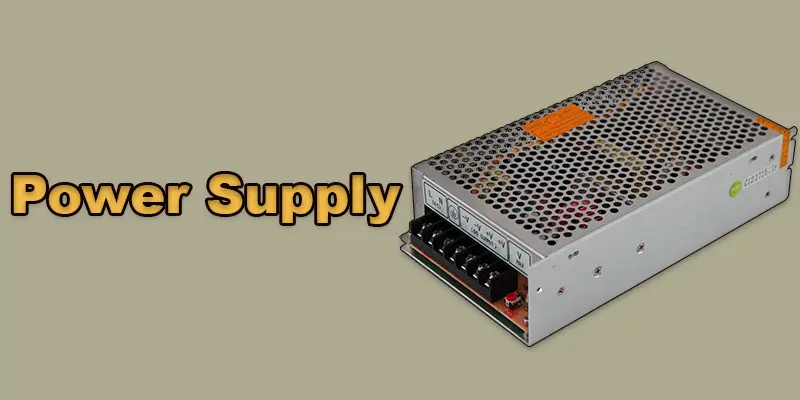
The device that provides your computer with the energy it needs to function is called a power supply. It takes electricity from your wall outlet, changes it into the right form, and sends it to all the parts of your PC. Without it, your computer wouldn’t run.
What are the Different Types of Power Supply in Computers?
One essential part that gives gadgets electrical power is a power supply. There are different types of power supplies, each suited to specific needs.
- ATX Power Supply
- SFX Power Supply
- Modular Power Supply
- Non-Modular Power Supply
- Server Power Supply
- Uninterruptible Power Supply (UPS)
- External Power Supply
- Bench Power Supply
- Linear Power Supply
- Switching Power Supply
ATX Power Supply
One common type of power supply seen in desktop computers is the ATX power supply. All internal parts, including the motherboard, hard drives, and graphics card, receive the electricity they require from it. Example: The Corsair RM750 is a popular ATX power supply known for its reliability and efficiency.
SFX Power Supply
For small form factor (SFF) or mini-ITX PC designs, an SFX power supply is a more compact variant of the ATX power supply. It provides similar functionality as an ATX but in a smaller size to fit in tight spaces. Example: The Corsair SF600 is a well-known SFX power supply, offering high efficiency in a small form factor.
Modular Power Supply
A modular power supply allows users to connect only the cables they need, helping reduce cable clutter and improve airflow inside the case. Example: The EVGA Super NOVA 750 G5 is a popular modular power supply known for its efficiency and cable management.
Non-Modular Power Supply
All of the wires on a non-modular power supply are fixed, so you can’t add or remove them to suit your needs. For instance, the Corsair CV650 is a dependable non-modular power supply that offers a strong power output without cable management flexibility.
Server Power Supply
A server power supply is designed to provide high-power output and reliability for server systems, often in data centers or enterprise environments. Example: The EVGA Super NOVA 1600 T2 is a high-capacity server power supply known for its stability and efficiency.

Uninterruptible Power Supply (UPS)
When there is an electrical outage, an Uninterruptible Power Supply (UPS) ensures that your devices continue to function until the main power is restored. Example: APC Back-UPS, which keeps computers and small electronics powered during outages.
External Power Supply
An external power source, which is frequently used to lower internal heat or space utilisation, is a device that supplies power to electronic devices from outside the device itself. Example: The power adapter for a laptop, which supplies power from a wall outlet to the laptop.
Bench Power Supply
A bench power supply is a tool used in workshops and labs to supply electrical power that may be adjusted for electronic circuit testing and powering. Example: Rigol DP832, which is commonly used for powering and testing various electronic components and devices.
Linear Power Supply
A linear power supply provides a stable output voltage by regulating the input power through a linear process, often resulting in less noise but more heat. Example: HP 6236B, a linear power supply used for precision laboratory applications.
Switching Power Supply
A switching power supply converts electrical power efficiently by rapidly switching the input voltage on and off, reducing energy loss and heat. Example: Mean-well LRS-350, a compact and efficient switching power supply commonly used in industrial applications.
What is the Purpose of a Power Supply?
A power supply’s function is to supply electrical energy for electronic systems and gadgets. It converts the incoming electrical energy (either from AC or DC sources) into the required voltage and current to ensure proper operation. Power supplies regulate and stabilize voltage to protect sensitive components and ensure reliable performance. The majority of electronic equipment wouldn’t work without a power source.
Final Thoughts
The Power Supply is the heart of your computer’s energy system. It delivers stable power to all parts like the motherboard, CPU, and storage devices. Without it, your system cannot function properly. Now you understand its role and importance in computer hardware. A good power supply improves performance, prevents damage, and keeps your system stable. Always choose a reliable and quality PSU for better safety and long life. Keep learning about computer components like cooling systems, motherboards, and storage devices. Stay curious and build your tech knowledge step by step.
FAQs
How do power supplies function in computers, and why are they important?
Power supplies in computers convert electricity from your wall outlet into the right voltage for the computer’s components. They are important because they ensure all parts of the computer get the power they need to work properly and safely.
What is the power supply rejection ratio?
A power supply’s ability to eliminate undesired noise or variations in its output voltage is gauged by its Power Supply Rejection Ratio (PSRR). A higher PSRR means the power supply keeps the voltage cleaner and more stable for your device.
What is a power supply unit?
An apparatus that transforms electrical power from an outlet into the proper voltage required to operate a computer or other electronic device is called a power supply unit (PSU). It ensures the device gets stable power for proper operation.
How power supply is done to rip?
Depending on the model, the Raspberry Pi (RIP) is powered via a micro-USB or USB-C cable that is connected to a reliable 5V power source, such as a USB power bank or power converter. This ensures it runs smoothly without interruptions.
Where can you check the power supply specifications or status for a device?
You can check the power supply specifications or status in the device’s manual, on the power supply unit label, or through system monitoring software for computers. These sources provide details on voltage, wattage, and other important info.






- Be Respectful
- Stay Relevant
- Stay Positive
- True Feedback
- Encourage Discussion
- Avoid Spamming
- No Fake News
- Don't Copy-Paste
- No Personal Attacks
- Be Respectful
- Stay Relevant
- Stay Positive
- True Feedback
- Encourage Discussion
- Avoid Spamming
- No Fake News
- Don't Copy-Paste
- No Personal Attacks
