Top 10 Mistakes Enterprises Make During Legacy Software Transformation
Published: 28 Aug 2025
Legacy solutions, the outdated technology-based architecture, become compromising aspects of businesses. With limited updates, non-existent integrations, and vulnerable security endpoints, these systems cost more if kept the same way. To upgrade from the existing workflow infrastructure and transition towards intelligent models, enterprises choose legacy software modernization.
However, sometimes in order to fasten the process or minimize capital investment, such decision-makers make mistakes that cost them much more money in the long term. In those cases, they need a service provider that assists them in making data-driven decisions while focusing on long-term ROI.
That being said, it becomes imperative to recognize such misconceptions or mistakes and rectify them prior to launch. Focusing on that, we bring forth a list of mistakes that you must avoid when modernizing your enterprise-level solutions.
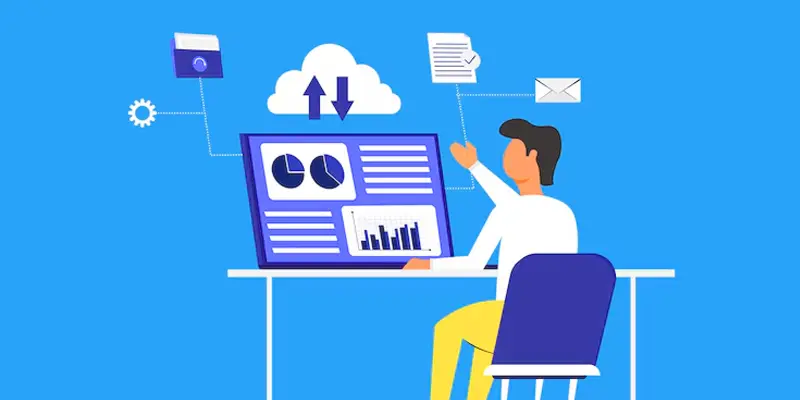
10 Mistakes to Avoid During Legacy Software Modernization
In order to modernize the legacy system to work as intended as per the innovative invention, bottleneck removal, and reduction in capital investment, you must avoid pitfalls that act inversely proportional to that. Keeping that in mind, here we bring the list and how to overcome them with a better strategy and a future-ready mindset.
Treating Transformation as a “One-Time IT Project”
Many businesses consider legacy software modernization as a one-time change for a long period of time. They assume that tweaking technologies here and there, replacing old with new, and locating vulnerabilities one-time will do the trick.
However, it is appropriate to get the intended results. For systematic transformation, you must consider this as a journey and build a transitioning roadmap that works on continuous optimization, strategic technology alignment, and business agility.
Ignoring Business Objectives in Favor of Technology
Oftentimes, enterprises jump directly to optimizing their business model as per the new technology to find a solution to their problem. For instance, the majority of businesses chose to adopt AI without assessing their problems and faced close to no change in terms of business automation.
In this case, businesses are to first build a case, pinpoint the problem, and then find out which technology fits right to resolve the issue. Doing this, they bring in innovation with intelligent technology while bringing the apt use of legacy application modernization services.
Poor Assessment of Existing Systems
Sometimes, rather than auditing their entire system for in-depth analysis, businesses consider their solution complexities simpler and underestimate their dependencies and technologies. With such a poor assessment, when the process is in action, they face issues and surprises in the middle of the project.
This can lead to business downtime and cause revenue loss at a faster rate. That being said, enterprises must conduct thorough audits to locate integrations, interdependencies, shadow infrastructure, and more build an intricate migration plan.
Big Bang Approach Instead of Incremental Change
When talking about legacy software modernization, it is often confused with the idea of ripping the entire system down, making speedy changes, and putting it back in place with new features and technologies. However, when such an approach is implemented, it only welcomes downtime, chaos, and system resistance.
To avoid all the enterprise-level issues, decision-makers must begin with an incremental approach, start with independent modules, assess the change, and move ahead with the next models. This way, while the process may seem slow, it still modernizes the entire system quickly than the above approach.
Underestimating Data Migration Challenges
Working without understanding the complications of data may bring forth businesses with structured and non-structured data that often cause data silos, non-compliance, or non categorization. With industry wide norms built focusing on privacy compliance for data, managing data can botch the process and corrupt the data, leading to data breaches.
In such cases, you must prioritize data cleansing and integrity, and consider it as a project to migrate without leaving any backdoor for data loss and breaches.
Neglecting Integration With Existing Ecosystems
The combination of old and new technologies has the tendency to sabotage the workflow. This often leaves the enterprises with disconnected silos and slides the efficiency down the slope. That being said, you must focus on bringing in an API-first approach to use middleware and microservices. This way, you gradually make the modifications rather than abruptly disrupting the entire integration process with legacy application modernization services.
Overlooking Security and Compliance
Legacy solutions with close to no compliance and security systems often find themselves in a rut, with the defaulters paying hefty penalties, data lost in breaches, and tarnished brand reputation. When an outdated system doesn’t optimize as per the norms and regulations like HIPAA and GDPR, when audited, it incurs capital investment loss. And if not that, they become a target of a cyberattack and lose data worth millions.
This can be rectified during legacy software modernization, where you must prioritize policy throughout the process. Making it an afterthought results in the same and brings the businesses in the same position, if not taken care of.
Insufficient Employee Training
Among the many mistakes that get overlooked, not training the employees properly also dampens the efficiency game. Non-alignment with the modern solution can cause a slump within the organization.
That can be avoided by conducting training sessions, workshops, and seminars that are focused on assisting the employees. You can bring in a wave of productivity into the system with explained discussions and issue resolutions.
Not Considering Old-Age UI/UX Design
Not prioritizing UI/UX is among the mistakes that enterprises make when modernizing their legacy software. They must focus on the clients and employees who constantly use the platform and make sure their strategies are aligned with their requirements.
If not taken care of, you might face lagged workflow or abandoned solutions by the users, boosting the bounce rate rather than the conversion rate.
Not Planning for Ongoing Maintenance Post-Transformation
Like we mentioned above, modernization is not a one-time thing but an ongoing process. A lot of decision-makers make this mistake and fall to legacy systems again. In this case, you must go ahead and ensure that the system has continuous support and maintenance from a legacy application modernization service provider that updates right on time. This way, all the necessary changes are made in time and no outdated quality is left behind.
Conclusion
As we wind up the bifurcation, we hope that our list assisted you with the mistakes that you need to avoid. Keeping that in mind, you must make decisions that do not appear as shortcuts but are long-term investments.


- Be Respectful
- Stay Relevant
- Stay Positive
- True Feedback
- Encourage Discussion
- Avoid Spamming
- No Fake News
- Don't Copy-Paste
- No Personal Attacks
- Be Respectful
- Stay Relevant
- Stay Positive
- True Feedback
- Encourage Discussion
- Avoid Spamming
- No Fake News
- Don't Copy-Paste
- No Personal Attacks
