Functions of a DBMS | Complete Simple Overview
Published: 24 Sep 2024
Have you ever lost important data or struggled to find the right information when you needed it most? This is a common problem for many people and businesses. As data grows every day, managing it becomes harder and more stressful. Without a proper system, data can become messy, slow, and even unsafe. This is where a Database Management System (DBMS) comes in. It helps store, organize, and manage data in a smart and secure way.
The functions of a Database Management System are designed to make your work easier and faster. It reduces errors, saves time, and keeps your data safe from loss or misuse. Imagine quickly finding any record in seconds instead of searching through piles of files. Sounds helpful, right? A DBMS makes this possible. It also allows multiple users to work on the same data at the same time without confusion. This improves teamwork and productivity.
In this guide, you will clearly understand the key functions of a DBMS in a simple way. Each function will help you see how a DBMS solves real-life data problems. By the end, you will know why a DBMS is important for modern data handling and how it can make your work easier and more organized.
What are the Functions of a Database Management System?
A Database Management System (DBMS) helps you store, manage, and control data in an organized way. It keeps data safe, easy to access, and well-structured. Let’s look at the main functions of a Database Management System in simple words.
- Data Storage
- Data Retrieval
- Data Update
- Data Security
- Data Constraints
- Data Integrity
- Concurrency Control
- Transaction Management
- Data Backup and Recovery
- Data Transformation and Presentation
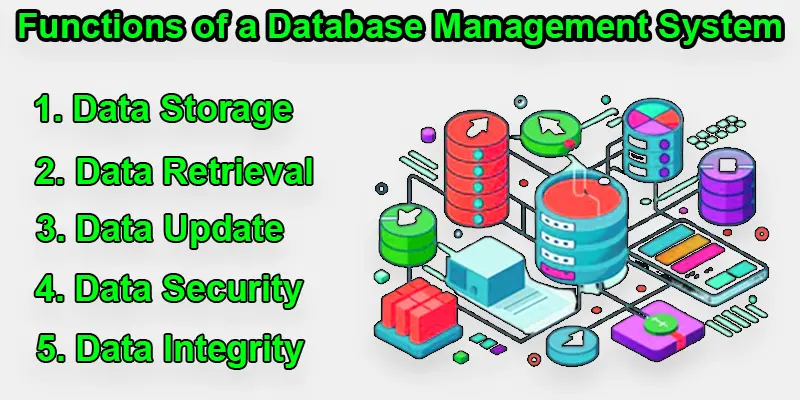
Data Storage
Data storage in a DBMS means keeping all your information in one place in an organized way. It’s like a digital filing cabinet where you can store large amounts of data, such as names, addresses, or transaction details. The DBMS arranges this data so that it’s easy to find and use whenever needed, saving you time and effort. It ensures your data is safe and ready for quick access.
Data Retrieval
Data retrieval in a DBMS is the process of finding and getting the information you need from the stored data. It’s like searching for a file in a big library, but much faster. You can ask the DBMS to search for specific details, like a name or an order number, and it will quickly show you the exact data you’re looking for. This makes it easy to access the right information without going through everything manually.
Data Update
Data update in a DBMS means making changes or corrections to the stored information. It’s like editing a document to keep the details current and accurate. Whether you need to change an address, update a price, or correct a mistake, the DBMS allows you to easily find and modify the data. This ensures that your database always has the latest and most accurate information.
Data Security
Data security in a DBMS is about keeping your information safe from unauthorized access or changes. It works like a digital lock, allowing only trusted people to view or edit the data. By setting up passwords and permissions, the DBMS ensures that sensitive information is protected from hackers or accidental changes, helping to keep your data private and secure.
Data Constraints
Data constraints in a DBMS are rules that ensure the data entered into the database is correct and meaningful. It’s like setting guidelines, such as making sure phone numbers only contain digits or that every email address has an “@” symbol. These constraints prevent mistakes by ensuring the data follows the right format and stays consistent. This helps maintain accuracy and reliability in the database.
Data Integrity
Data integrity in a DBMS ensures that the information in the database is accurate, complete, and reliable. It’s like making sure everything stays in order, with no duplicate records or missing details. Data integrity checks that the data is consistent and correct over time, even when multiple changes are made. This helps maintain trust in the accuracy of the database.
Concurrency Control
Concurrency control in a DBMS ensures that multiple people can use the database at the same time without causing problems. It’s like several people working on a shared document, but the DBMS ensures everyone’s changes are correctly handled. This prevents conflicts, such as two users accidentally editing the same data in a way that could cause errors, ensuring everything runs smoothly even when many users are working at once.
Transaction Management
Transaction management in a DBMS ensures that all changes made to the database are completed properly and safely. It’s like making sure a series of steps, such as transferring money from one account to another, happen smoothly and fully. If something goes wrong in the middle, transaction management ensures that the database goes back to its original state, preventing any partial changes or errors. This keeps data accurate and reliable.
Data Backup and Recovery
Data backup and recovery in a DBMS is about creating copies of your data to keep it safe in case something goes wrong. It’s like making a photocopy of important documents so you don’t lose them. If there’s a system failure, accidental deletion, or any other problem, you can quickly restore your data from the backup. This process helps ensure that your information is protected and can be recovered whenever needed.
Data Transformation and Presentation
Data transformation and presentation in a DBMS involve changing the data into a useful format and displaying it in an easy-to-understand way. It’s like taking raw ingredients and cooking them into a delicious meal. The DBMS processes the data, organizing and summarizing it, so users can see trends, reports, or charts. This makes it simpler to analyze and make decisions based on the information.
Conclusion
In short, the functions of a Database Management System help store, manage, and protect data in a simple and efficient way. From data storage and retrieval to security and backup, a DBMS makes data handling smooth and reliable. It saves time, reduces errors, and improves teamwork. Whether you are a student or a business owner, using a DBMS can make your work easier and more organized. Ready to take control of your data? Start learning and using DBMS today to improve your skills and efficiency.
FAQs
What are the 5 main functions of a DBMS administrator?
They manage data access, ensure backups, tune performance, control security, and plan for recovery. Their role keeps the database running safely and efficiently.
What are the primary key functions of a DBMS?
A primary key uniquely identifies each record in a table. It prevents duplicate data and ensures accuracy.
What are the four basic database functions?
They are: Create, Read, Update, and Delete, also called CRUD. These actions help manage data in a database.
What is a functional dependency in DBMS?
It shows the relationship between two data columns. If one value determines another, there is a functional dependency.





- Be Respectful
- Stay Relevant
- Stay Positive
- True Feedback
- Encourage Discussion
- Avoid Spamming
- No Fake News
- Don't Copy-Paste
- No Personal Attacks
- Be Respectful
- Stay Relevant
- Stay Positive
- True Feedback
- Encourage Discussion
- Avoid Spamming
- No Fake News
- Don't Copy-Paste
- No Personal Attacks
