Top 15 Real Life Applications of DBMS You Should Know
Published: 23 Sep 2024
Have you ever wondered how your bank app shows your balance in seconds or how online shopping websites process your order so quickly? Behind all of this, there is a powerful system working in the background called a Database Management System (DBMS). Without it, managing large amounts of data would be slow, confusing, and full of errors. Many people face problems like data loss, slow access, and poor organization when systems are not managed well. This can be frustrating, especially when accuracy and speed matter.
The good news is that the application of DBMS solves these problems in a smart and simple way. It helps store, organize, and manage data efficiently across different industries. From banking and healthcare to education and e-commerce, DBMS plays an important role in making systems faster and more reliable. It also ensures data security and easy access when needed.
In this guide, you will learn how DBMS is used in real life with simple and clear examples. We will explore its major applications and see how it improves everyday systems. By the end, you will understand why DBMS is so important and how it makes modern digital life easier and more efficient.
What are the Applications of DBMS?
A Database Management System (DBMS) is used in many real-life areas. It helps store, manage, and organize data in a simple way. Businesses, schools, hospitals, and banks all use DBMS every day. It saves time and reduces errors. Here are the main applications of DBMS explained in simple words:
- Banking Systems
- Online Shopping Platforms
- Airline Ticket Reservation Systems
- Healthcare and Patient Records
- Schools and Educational Systems
- Social Media Platforms
- Telecom Systems
- Human Resource (HR) and Employee Data Management
- Inventory Control and Stock Tracking
- Digital Library Management Systems
- Customer Relationship Management (CRM)
- Government Services
- Hotel Booking and Management Systems
- Payroll Processing and Salary Records
- Data Analysis and Research Management
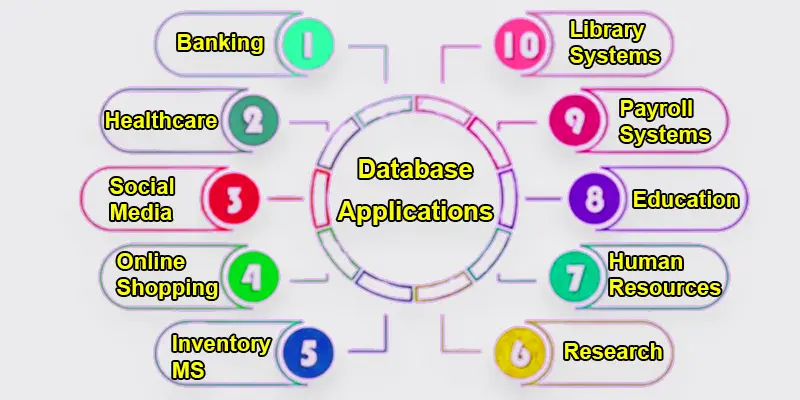
Banking Systems
A database management system is used in banking to store and manage transaction records, account information, and customer data. It helps banks keep track of deposits, withdrawals, loans, and payments securely. With a DBMS, banks can quickly access data, process transactions, and ensure that everything is accurate and safe, making banking services more efficient for both the bank and its customers.
Online Shopping Platforms
A database management system is used in online shopping to record order details, customer accounts, and product information. It helps websites manage inventory, track sales, and process payments securely. With a DBMS, shoppers can easily browse products, add items to their carts, and complete their purchases. This system ensures that all data is organized and accessible, making the shopping experience smooth and efficient.
Airline Ticket Reservation Systems
In airline reservations, a Database Management System (DBMS) manages flight schedules, bookings, and passenger information. It helps airlines securely track available seats, ticket prices, and customer details. With a DBMS, travellers can easily search for flights, book tickets, and make changes to their reservations. This system ensures that all data is organized and up-to-date, making the booking process quick and efficient for everyone.
Healthcare and Patient Records
Patient records, medical histories, and treatment details are all stored and managed in the healthcare industry using Database Management Systems (DBMS). It helps hospitals and clinics keep track of appointments, prescriptions, and test results securely. With a DBMS, healthcare providers can quickly access important patient data, improving the quality of care. This system ensures that all information is organized and readily available, making it easier for doctors and nurses to provide timely and effective treatment.
Schools and Educational Systems
A Database Management System (DBMS) is used in education to keep track of attendance, grades, and student information. Schools and universities store important information about students, teachers, and classes securely. With a DBMS, teachers can easily track student progress, manage course schedules, and communicate with students. This system helps keep all data organized and accessible, making it easier for educational institutions to provide support and resources to their students.

Social Media Platforms
A Database Management System (DBMS) is used in social media to maintain user interactions, posts, and profiles. Platforms like Facebook and Instagram rely on DBMS to keep track of friends, messages, and shared content securely. With a DBMS, users can easily find their connections, post updates, and engage with others. This system ensures that all data is organized and accessible, providing a smooth and enjoyable experience for users as they connect and share online.
Telecom Systems
A Database Management System (DBMS) is used in telecommunications to handle financial information, client data, and call logs. It helps phone companies keep track of usage patterns, service plans, and payment histories securely. With a DBMS, companies can quickly access data to resolve customer issues and process bills. This system ensures that all information is organized and easily accessible, making communication services more efficient for both the company and its customers.
Human Resource (HR) and Employee Data Management
A Database Management System (DBMS) is used in human resources to store and manage employee data, including personal information, job roles, and performance reviews. It helps companies keep track of hiring processes, salaries, and benefits securely. With a DBMS, HR teams can easily access important data to manage employee needs and resolve issues. This system ensures that all information is organized and readily available, making it easier for organizations to support their workforce effectively.
Inventory Control and Stock Tracking
In inventory management, a Database Management System (DBMS) is used to keep track of stock levels, product details, and sales data. It helps businesses monitor what items are in stock, what needs to be ordered, and when products are sold. With a DBMS, companies can easily access information about their inventory, ensuring they have the right products available for customers. This system makes managing inventory more efficient and helps prevent shortages or excess stock.
Digital Library Management Systems
A Database Management System (DBMS) is used in library systems to arrange and maintain member data, borrowing records, and book inventories. It helps libraries keep track of which books are available, who has borrowed them, and when they are due back. With a DBMS, librarians can easily search for books, manage memberships, and handle fines. This system ensures that all information is organized and accessible, making it easier for both staff and patrons to enjoy library services.
Customer Relationship Management (CRM)
A database management system (DBMS) is used in customer relationship management (CRM) to store and manage customer interactions, sales data, and feedback. It helps businesses keep track of customer preferences, purchase history, and communication records. With a DBMS, companies can easily access important information to provide personalized service and improve customer satisfaction. This system ensures that all customer data is organized and accessible, making it easier for businesses to build strong relationships with their clients.
Government Services
A Database Management System (DBMS) is used in government services to store and manage citizen data, including tax information, public service information, and personal records. It helps government agencies keep track of important details securely and efficiently. With a DBMS, officials can easily access and update information, making it simpler to provide services like healthcare, education, and social assistance. This system ensures that all data is organized and readily available, improving the efficiency of government operations.
Hotel Booking and Management Systems
A Database Management System (DBMS) is used in hotels to handle billing information, guest information, and reservations. It helps hotels keep track of available rooms, bookings, and check-in/check-out times securely. With a DBMS, hotel staff can quickly access guest preferences and handle requests, ensuring a smooth experience. This system ensures that all information is organized and easily accessible, making it easier for hotels to provide excellent service to their guests.

Payroll Processing and Salary Records
A Database Management System (DBMS) is utilized in payroll systems to handle tax information, work hours, and employee salaries. It helps companies calculate paychecks accurately and keep track of bonuses and deductions securely. With a DBMS, HR teams can easily access employee data to ensure everyone is paid on time and correctly. This system keeps all payroll information organized and accessible, making it simpler for businesses to handle employee compensation efficiently.
Data Analysis and Research Management
A Database Management System (DBMS) is used in analytics and research to store and arrange massive volumes of data for analysis. Researchers can easily access, update, and analyze this data to draw meaningful conclusions and make informed decisions. With a DBMS, complex datasets are managed efficiently, allowing for quicker insights and better reporting. This system ensures that all information is structured and accessible, making it easier for researchers to conduct their studies and share findings.
What is DBMS and Its Uses in Daily Life?
Database management systems, or DBMS, are programs made to handle and store data in an organized way. It allows you to easily save, update, and retrieve information in one centralized location, making data management more efficient and secure compared to using paper records or scattered files. A DBMS ensures that data is well-organized, making it quick and simple to find, update, or delete information when needed. It is widely used by companies, websites, and apps to keep their data safe, accessible, and organized.
Conclusion
The application of DBMS is everywhere in our daily lives. It helps manage data in banks, schools, hospitals, online stores, and more. DBMS keeps information organized, secure, and easy to access. It also saves time and reduces errors, making systems more reliable and efficient. Understanding DBMS helps you see how technology supports everyday tasks. Now that you know its uses, you can better appreciate its role in modern systems. Keep exploring and learning about database management systems. It can help you build a strong base in the world of data and technology.
FAQs
How is DBMS used in banks?
DBMS is used in banks to store and manage customer information, account details, and transaction records. It helps keep track of money transfers, deposits, and withdrawals securely and makes it easy for banks to update and retrieve data.
How does DBMS help in hospitals?
In hospitals, DBMS is used to store patient records, medical history, and treatment details. It helps doctors and nurses quickly access important information, like test results or prescriptions, to provide better care.
What are examples of database applications?
Examples of database applications include online shopping websites, social media platforms, airline booking systems, and school management systems. These applications use DBMS to manage data for smooth operations.
What are some database applications in DBMS?
Some common database applications in DBMS include inventory systems to track products, CRM systems to manage customer relationships, payroll systems to calculate employee salaries, and hotel booking systems to manage reservations.
What are the 7 keys in database?
The seven keys are Primary, Foreign, Candidate, Super, Composite, Alternate, and Unique Key. They control how data is connected and accessed.
What is view in DBMS?
A view is a virtual table created from a database. It shows specific data without changing the original table.





- Be Respectful
- Stay Relevant
- Stay Positive
- True Feedback
- Encourage Discussion
- Avoid Spamming
- No Fake News
- Don't Copy-Paste
- No Personal Attacks
- Be Respectful
- Stay Relevant
- Stay Positive
- True Feedback
- Encourage Discussion
- Avoid Spamming
- No Fake News
- Don't Copy-Paste
- No Personal Attacks
