Difference Between Cyber Security and Information Security
Published: 10 Feb 2026
Cyber security vs information security is a topic many people talk about today. Both protect data, but they do not mean the same thing. Many users feel confused because the words sound similar. Are they the same, or do they serve different goals?
This confusion often leads to weak protection and poor decisions. Businesses fear data loss, hacking, and privacy issues every day. Home users worry about stolen passwords and online fraud. Understanding cyber security vs information security helps solve these problems. It also helps you choose the right protection for your data.
Cyber Security
Cyber security involves keeping computers, networks, and internet-based systems safe from threats and attacks. It helps keep data safe from hackers and cyber attacks. Cyber security protects emails, apps, and internet connections. It also stops viruses and harmful software. This protection is important for both users and businesses. Example: Using antivirus software to protect a laptop from viruses and hacking.
Information Security
Information security is the practice of protecting all types of information. It keeps data safe from unauthorized access or misuse. Information security protects digital files and paper records. It also helps prevent data loss and leaks. This protection is important for trust and privacy.Example: Locking a cabinet that stores printed customer records to keep them safe.
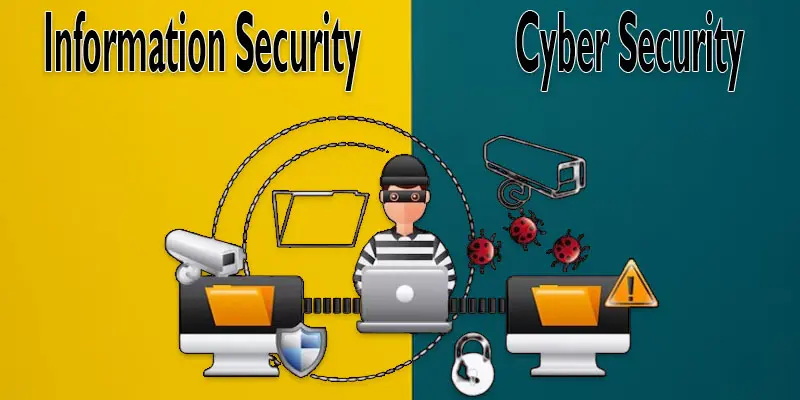
What is the Difference Between Cyber Security and Information Security?
Cyber security and information security are different because they focus on protecting data in different ways. Cyber security safeguards digital systems and online information, while information security protects all types of data, including physical and digital records.
| Cyber Sec | Information Sec |
|---|---|
| Protects digital systems and online data. | Protects all types of information. |
| Online threats and attacks. | Data safety and privacy. |
| Narrow scope. | Wider scope. |
| Only digital data. | Digital and physical data. |
| Computers and servers. | Computers and paper files. |
| Protects networks. | Protects data access. |
| Strong focus on the internet. | Internet is optional. |
| Not included. | Included. |
| Main concern. | One of many concerns. |
| Limited role. | Very important. |
| Controls online access. | Controls all access. |
| Focuses on digital loss. | Focuses on all data loss. |
| Firewalls and antivirus. | Policies and controls. |
| Less focus. | Strong focus. |
| Less policy-driven. | Highly policy-driven. |
| Protects systems. | Protects information. |
| Email hacking. | File protection. |
| Malware and phishing. | Data misuse. |
| Part of information security. | Includes cyber security. |
| Stop cyber threats. | Protect information. |
| Using a firewall to block hackers from accessing a company network. | Restricting employee access to confidential company files. |

Which One Do You Need?
Choosing the right option depends on your data, your risks, and how you want to protect your information.
- Choose cyber security if you want to protect devices, networks, and online systems.
- Choose information security if you need to protect all types of data, including files and records.
- Use cyber security to stop hacking, malware, and phishing attacks.
- Use information security to control data access and prevent data leaks.
- Most users and businesses need both for complete protection.
Why Cyber Security and Information Security Matter Today?
Cyber security and information security matter because online threats are growing every day. People store more data on computers and the internet now. Hackers try to steal personal and business information.
Data leaks can cause money loss and trust issues. These security practices help keep data safe and private. They also protect users from fraud and online scams. Strong security helps people and businesses feel safe online.
What are the Advantages and Disadvantages of Information and Cyber Security?
Understanding the pros and cons of information and cyber security helps you see how they protect data and where challenges may occur.
What are the Advantages of Cyber Security?
- Protects computers, networks, and online data from hackers.
- Prevents malware, viruses, and phishing attacks.
- Keeps personal and business information safe.
- Builds trust with users and customers.
- Ensures smooth online operations without disruptions.
What are the Disadvantages of Cyber Security?
- Can be expensive to implement advanced security tools.
- Requires constant updates and monitoring.
- May slow down systems due to heavy security software.
- Needs skilled professionals to manage effectively.
- Cannot guarantee 100% protection against all attacks.
What are the Advantages of Information Security?
- Protects all types of data, including digital and physical records.
- Prevents unauthorized access and data leaks.
- Helps comply with legal and privacy requirements.
- Reduces the risk of human errors affecting sensitive data.
- Builds overall trust and credibility for businesses.
What are the disadvantages of Information Security?
- Can be complex to manage all types of data.
- Needs strict policies and employee training.
- May require high costs for tools and processes.
- Slower access if too many restrictions are applied.
- Still vulnerable to insider threats or mistakes.

What are the Best Practices for Beginners in Cyber Security and Information Security?
Knowing the best practices for beginners in cyber security and information security helps you start protecting your data safely and effectively.
- Use strong and unique passwords for all accounts.
- Keep your software, apps, and devices updated regularly.
- Avoid clicking on suspicious links or emails.
- Allow only trusted users to access sensitive information.
- Keep copies of important files to avoid losing them.
- Protect your devices with security software and firewalls.
- Educate yourself and employees about security risks.
- Monitor accounts and systems for unusual activity.
- Protect both digital and physical information.
- Stay aware of new threats and security updates.
How Do Information Security and Cybersecurity Overlap?
Information security and cybersecurity overlap because both aim to protect data. Cybersecurity focuses on digital systems, while information security covers all types of information, including physical records. They share common goals like preventing data theft, unauthorized access, and loss.
Both use tools, policies, and best practices to keep information safe. For example, strong passwords and firewalls protect digital files, which are part of both fields. Businesses often implement both together for complete protection. This overlap helps ensure that all data, online or offline, stays secure.
Final Thought
Information security vs cyber security is a crucial topic for anyone handling data today. From my experience, combining both approaches offers the strongest protection for your personal and business information. Don’t wait for a security breach, start implementing these practices today to keep your data safe.
FAQS
IT is a broader field covering all technology systems, while cyber security focuses on protecting data and systems. For safety, cyber security is more specialized.
They are related but not the same. Cyber security deals with online threats, while information security protects all types of information.
No. Data security is only about protecting data, while information security protects all information, including documents and records.
Not better or worse—they work together. Information security is broader, and cyber security is part of it, focusing on digital systems.
It is sometimes called InfoSec.
No. Cyber security comes under information security, not the other way around.






- Be Respectful
- Stay Relevant
- Stay Positive
- True Feedback
- Encourage Discussion
- Avoid Spamming
- No Fake News
- Don't Copy-Paste
- No Personal Attacks
- Be Respectful
- Stay Relevant
- Stay Positive
- True Feedback
- Encourage Discussion
- Avoid Spamming
- No Fake News
- Don't Copy-Paste
- No Personal Attacks
