How to Restore the Laser Printer for Smooth Printing
Published: 14 Nov 2025
Did you know most laser printers stop working properly due to dust, toner leaks, or drum issues, not because they’re broken? Learning how to restore a laser printer can save you time and money while keeping print quality sharp and clean. It’s easier than you might think once you know the right steps.
Ever looked at your printer and wondered, “Why is it not printing like before?” You’re not alone! Many users face this same confusion, unsure whether to repair or replace. That’s where understanding how to restore a laser printer makes all the difference.
Faded prints, paper jams, or slow printing can be so frustrating, right? Instead of buying a new printer, try bringing yours back to life. This simple guide on how to restore a laser printer will walk you through easy steps to make it work like new again.
What Is Laser Printer Restoration?
Laser printer restoration means bringing your old or slow printer back to good working shape. You clean the inside, check the toner, and fix small issues that stop it from printing well. Many people think a printer is dead when the prints look faint or messy, but most problems are easy to fix. You only need simple tools and a little time. When you restore your printer, it works faster, prints cleaner, and lasts longer. This helps you save money and avoid buying a new one.
What Tools and Items Do You Need?
You need a few basic tools and items to restore your laser printer and make it work smoothly again.
- Soft Cloth: Helps you wipe dust and dirt gently from the printer.
- Compressed Air: Blows out dust from small and hard-to-reach areas.
- Screwdriver Set: Let’s you open parts of the printer safely.
- Replacement Toner: Fixes faded prints and keeps colors sharp.
- Drum Unit: Needed when prints look streaky or uneven.
- Gloves: Protect your hands and keep printer parts clean from fingerprints.
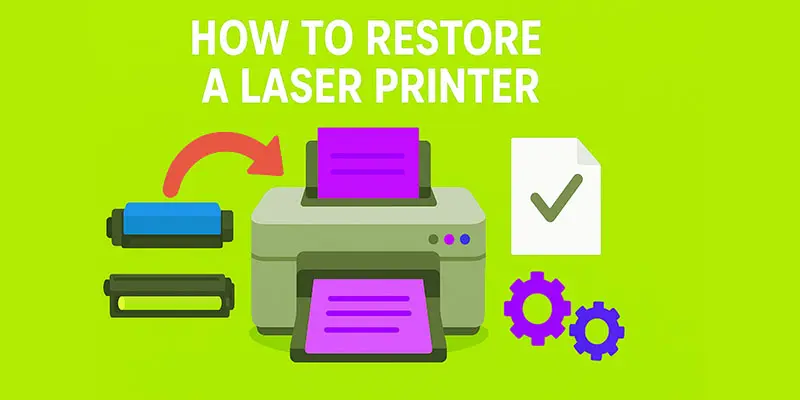
What Is the Step-by-Step Guide to Restore a Laser Printer?
This step-by-step guide helps you bring your laser printer back to good working condition in an easy and clear way.
- Turn Off and Unplug
- Open and Inspect
- Clean the Inside
- Check the Toner
- Inspect the Drum
- Check Paper Path
- Reassemble and Test
Turn Off and Unplug
Always start by turning off your laser printer using the power button. Then, unplug it from the wall socket to stay safe while working inside. This prevents any electric shock or damage to the printer. Never try to fix the printer while it’s still connected to power. Safety first makes the restoration process easier and worry-free.
Open and Inspect
After unplugging, carefully open your printer’s top cover or access panel. Remove the paper tray and toner cartridge to see inside clearly. Look for dust, paper scraps, or toner spills that might cause problems. Inspect rollers and other parts for wear or damage. This step helps you find the issues before cleaning or fixing.
Clean the Inside
Use a soft cloth or microfiber wipe to gently clean dust and toner inside the printer. You can also use compressed air to blow out dirt from small or hard-to-reach areas. Avoid using water or wet cloths, as they can damage the printer. Clean the rollers carefully to prevent paper jams. Keeping the inside clean helps the printer work smoothly and print clearly.
Check the Toner
Remove the toner cartridge from the printer and check its level. Look for leaks, clumps, or low toner that can cause faded or streaky prints. Shake the cartridge gently to spread the toner evenly if it’s still usable. Replace the toner if it’s empty or damaged. Checking the toner keeps your prints sharp and clear.
Inspect the Drum
The drum is the part that transfers toner to paper, so it’s important to check it carefully. Look for scratches, toner buildup, or worn spots on the drum surface. Clean it gently with a soft cloth if it’s dirty. Replace the drum if it’s damaged or prints look streaky. A healthy drum ensures your printer produces clear and smooth prints.
Check Paper Path
Check the paper path by looking inside the printer where the paper moves. Remove any stuck or torn pieces of paper carefully. Inspect the rollers to make sure they are clean and not worn out. Clear any dust or debris that might block the paper. A clean paper path prevents jams and keeps printing smooth.
Reassemble and Test
Once you’ve cleaned and inspected all components, gently reinsert the toner, drum, and paper tray. Close the printer cover properly, plug it in, and power it on. Run a test print to make sure your printer is functioning properly. Testing ensures your printer is fully restored and ready to use.
What Are Common Problems and Quick Fixes for a Laser Printer?
Many laser printers face common issues, but most problems can be fixed quickly with a few easy steps.
- Printer Not Turning On: Check the power cable, plug, and socket.
- Faded Prints: Replace the toner or clean the drum unit.
- Paper Jams: Remove stuck paper and clean the rollers.
- Error Messages: Reset the printer or update its firmware.
- Slow Printing: Clear the printer queue and check for network issues.
- Strange Noises: Inspect internal parts for loose or damaged components.
What are the Maintenance Tips to Keep Your Printer Working?
Following a few easy maintenance tips can keep your laser printer working smoothly for a long time.
- Clean the Printer Regularly: Wipe dust and toner inside every month.
- Store Toner Properly: Keep cartridges in a cool, dry place.
- Avoid Overloading Paper Tray: Only load the recommended number of sheets.
- Turn Off When Not in Use: Helps extend printer life and saves energy.
- Check for Wear and Tear: Inspect rollers and parts to prevent issues early.
- Use Quality Paper: Reduces jams and keeps prints clear.
Final Thought
The how to restore a laser printer may seem tricky at first, but with patience and careful steps, it can save you time and money. I personally recommend following the manufacturer’s guidelines and keeping a maintenance checklist handy. Don’t wait, start restoring your laser printer today and enjoy smooth, hassle-free printing.
FAQS
To restore your printer, you can clean it, check for jammed paper, and refill or replace the toner/ink. You may also reset it to default settings to fix errors. This helps your printer work like new again.
Manually reset a printer by turning it off, unplugging it for a few minutes, and then turning it back on. Some printers have a reset option in the menu that you can select.
Many printers have a small reset button, but some only allow resets through the control panel. Check your printer’s manual to see where it is.
Check connections, refill ink or toner, remove paper jams, and restart the printer. Resetting it to default settings can also help fix errors.
Unplugging the printer can act as a soft reset. It clears temporary errors but doesn’t erase saved settings or network connections.
Go to your printer’s control panel or menu, locate the reset or factory default option, and follow the instructions on the screen to complete the reset.
Printers reset to fix errors, clear stuck print jobs, restore default settings, and improve performance. Resetting often solves common issues.
All your custom settings, like network or print preferences, will be erased. The printer returns to how it was when first purchased.
Yes. Power cycling means turning the printer off and on to fix minor issues. Resetting restores default settings and clears stored preferences or errors.




- Be Respectful
- Stay Relevant
- Stay Positive
- True Feedback
- Encourage Discussion
- Avoid Spamming
- No Fake News
- Don't Copy-Paste
- No Personal Attacks
- Be Respectful
- Stay Relevant
- Stay Positive
- True Feedback
- Encourage Discussion
- Avoid Spamming
- No Fake News
- Don't Copy-Paste
- No Personal Attacks
