Artificial Intelligence (AI)| Applications, Types, Definition, History, Pros and Cons
Published: 8 Aug 2024
Have you ever wondered how your phone suggests the right video or how maps show the fastest route? These are simple examples of the application of artificial intelligence in daily life. Today, many people feel confused about AI. Some think it is too complex. Others worry they cannot use it in real work. But the truth is simple. AI is already helping you in ways you may not notice.
Businesses, students, and even small shop owners use AI to save time and make better decisions. For example, online stores use AI to suggest products. Hospitals use it to support doctors in early diagnosis. This means AI is not just for experts. It is for everyone.
In this guide, you will learn the real application of artificial intelligence in easy words. You will see how AI works in different fields. You will also discover how it can help you grow, learn, and work smarter. Ready to explore how AI can change your daily life?
What is Artificial Intelligence? (Simple Definition)
Artificial Intelligence (AI) means machines can think and learn like humans. It helps computers make decisions, solve problems, and understand data. For example, voice assistants like Siri or Google Assistant answer your questions. Netflix suggests movies based on your choices. These are real-life AI examples. In simple words, AI makes smart systems that can work faster and better. It is widely used in daily life, business, and technology.
What are the Applications of Artificial Intelligence?
Explore numerous applications of artificial intelligence, each performing different tasks.
- Healthcare: AI analyzes medical images, diagnoses diseases, and recommends treatments, improving patient care and operational efficiency in hospitals.
- Finance: In the financial sector, AI helps with fraud detection, automates trading, and provides personalized financial advice, enhancing security and investment strategies.
- Customer Service: The chatbots and virtual assistants of AI-powered enhance user satisfaction and response times by addressing consumer inquiries, resolving issues, and providing 24/7 support.
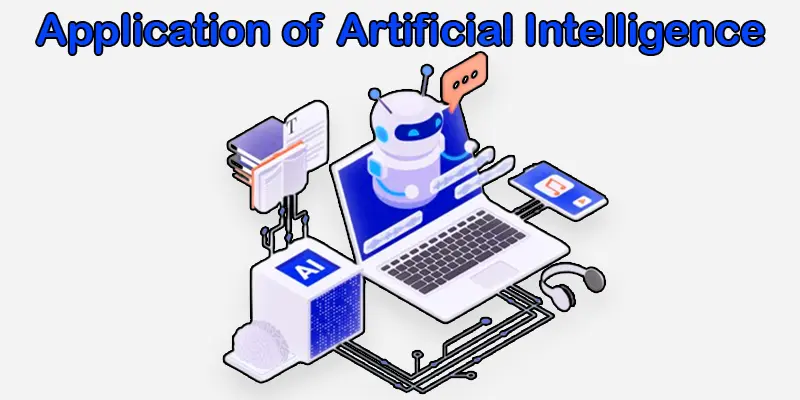
How does AI work?
Artificial intelligence, or AI, performs activities that often require human intelligence using algorithms and vast volumes of data.
- Data Collection: AI systems gather data from text, images, videos, sensor readings, and user interactions.
- Processing: Collected data is cleaned and organized, removing errors and irrelevant information to ensure it’s useful.
- Learning: Machine learning algorithms examine data to identify trends and generate forecasts or choices.
- Model Building: AI builds mathematical models based on the learned patterns to make future predictions or decisions.
- Inference: The AI uses the models to make real-time predictions or decisions, such as understanding spoken commands.
- Feedback and Improvement: Continuous feedback allows AI to fine-tune its models, improving accuracy over time.
Why is AI Important Today?
AI, or artificial intelligence, is important because it helps make our lives easier and more efficient.
- Personalized Experiences: AI can customize services to fit individual needs. For example, streaming services use AI to recommend movies or shows based on what you like to watch.
- Innovation and Development: AI helps create new technologies and solutions that can solve complex problems. For example, AI is used in self-driving cars, which could make transportation safer and more efficient.
- Enhanced Productivity: Because AI is so good at handling chores, individuals can focus on more important and creative work, increasing productivity across various industries.
What are the Advantages and Disadvantages of Artificial Intelligence (AI)?
AI offers significant benefits regarding efficiency, availability, and personalization, but poses challenges like job displacement, lack of human touch, and privacy concerns.
Advantages of Artificial Intelligence
- Efficiency: AI can complete tasks more quickly and precisely than humans, reducing errors and saving time. For example, AI can quickly analyze large amounts of data that would take humans much longer to process.
- 24/7 Availability: AI systems can work continuously without getting tired or needing breaks. This makes them ideal for tasks that require constant monitoring or operation, such as customer service chatbots that are available around the clock.
- Personalization: AI can tailor experiences to individual preferences. For instance, AI algorithms can recommend products, music, or movies based on past choices, making your experience more enjoyable and relevant.
Disadvantages of Artificial Intelligence
- Job Displacement: As AI takes over repetitive or simple tasks, some jobs may become obsolete, leading to job loss for certain workers. This can create economic and social challenges.
- Lack of Human Touch: AI lacks the empathy, creativity, and understanding humans possess. For example, a chatbot might not be able to comfort someone going through a tough time as well as a human could.
- Privacy Concerns: Privacy and data security must be addressed because AI systems usually require enormous volumes of data to function successfully. Misuse of this data can lead to breaches and the exploitation of personal information.
How Does Strong AI Compare to Weak AI?
| Strong AI | Weak AI |
|---|---|
| Artificial general intelligence (AGI) is made to comprehend, acquire, and apply knowledge to various tasks like humans. Robust AI can reason, think, and solve issues flexibly and adaptively. | Also known as narrow AI, it is intended to carry out particular duties. Virtual assistants such as Siri or Alexa, which lack general intelligence but can respond to queries and issue commands, should be considered. |
What are the Types of Artificial Intelligence Technology?
Researchers are trying to make more intelligent AI and better understand how intelligence and consciousness work. To explain these ideas, they have identified four types of artificial intelligence.
- Reactive Machines AI
- Limited Memory AI
- Theory of Mind AI
- Self-aware AI
Reactive Machines AI
These AIs can only react to specific situations. They don’t remember past experiences and can’t learn. An example is IBM’s Deep Blue, which plays chess by evaluating current moves.
Limited Memory AI
These AIs can use past experiences to make decisions, but their memory is short-lived. An example is self-driving cars, which use past data like traffic patterns to make decisions.
Theory of Mind AI
This type of AI understands the emotions, beliefs, and intentions of others. It’s still in the research stage and aims to interact more naturally with humans.
Self-aware AI
These artificial intelligences are conscious and self-aware, aware of their feelings and ideas. This is a theoretical idea that has not yet come to pass.
What are Artificial Intelligence Examples, and How are They Used Today?
AI is woven into many parts of our daily lives, making things more convenient, efficient, and personalized.
- Virtual Assistants
- Examples: Siri, Alexa, Google Assistant
- Usage: Addressing inquiries, establishing reminders, and managing smart home appliances.
- Recommendation Systems
- Examples: Netflix, Amazon, Spotify
- Usage: Suggesting movies, products, or music based on user preferences and past behavior.
- Self-Driving Cars
- Examples: Tesla Autopilot, Waymo
- Usage: Navigating roads, avoiding obstacles, and assisting with driving tasks.
- Chatbots
- Examples: Customer service bots, ChatGPT
- Usage: Handling customer inquiries, providing information, and assisting with tasks through text or voice.
- Image and Speech Recognition
- Examples: Face ID on iPhones, Google Translate
- Usage: Unlocking devices with facial recognition and translating spoken language in real-time.
What is the Difference Between Augmented Intelligence and Artificial Intelligence?
| Augmented Intel | Artificial Intel |
|---|---|
| Definition: Enhances human decision-making by providing tools and insights without replacing human judgment. | Best Definition of AI: AI is a versatile technology that enables machines to think, learn, and make decisions like humans. It involves creating computer programs that can solve problems, understand language, recognize patterns, and improve over time through experience. Generally, AI allows computers to perform tasks requiring human intelligence, such as playing games, answering questions, or driving cars. |
| Purpose: To improve human capabilities by making tasks more efficient and informed. For example, AI tools in healthcare provide doctors with better diagnostic information but rely on the doctors to make the final decisions. | Purpose: To automate tasks and processes, often aiming to replicate or exceed human capabilities. For instance, AI can drive cars autonomously or recommend products based on user behaviour without human intervention. |
What is the Ethical Use of AI?
Ethical use of artificial intelligence means using AI in fair, responsible, and beneficial ways for everyone.
- Fairness: AI should be designed to avoid bias and treat everyone equally. For example, AI should not discriminate based on gender or race when hiring.
- Transparency: It should be clear how AI makes decisions. People should understand how an AI system works and why it makes certain choices.
- Privacy: AI should respect people’s privacy by protecting personal data and using it responsibly. For instance, AI should not misuse or expose sensitive information.
What is the History of Artificial Intelligence (AI)?
AI started as a dream in the 1950s, faced ups and downs, and has become a powerful tool we use daily.
1950s
Beginning: The idea of AI began with computers getting smarter. Alan Turing proposed the concept of machines that could think.
1960s-1970s
Early Development: Scientists developed the first artificial intelligence (AI) programs that could play chess and solve problems.
1980s
AI Winter: Progress slowed because AI didn’t meet high expectations. Funding and interest in AI research dropped.
1990s
Renewed Interest: AI started improving with better algorithms and more powerful computers.
2000s
Rise of Machine Learning: AI shifted towards machine learning, where computers learn from data. This led to advancements in speech recognition, image processing, and more.
2010s
Deep Learning Boom: AI made huge leaps with deep learning, a type of machine learning. AI systems could recognize speech, translate languages, and even drive cars.
Today
Everyday Use: AI is currently used in many aspects of our daily lives, from Netflix and Amazon recommendation engines to virtual assistants like Siri and Alexa. It continues to evolve, promising even more advanced and intelligent applications.
What is AI in the workforce?
AI in the workforce refers to integrating artificial intelligence technologies to enhance work processes and productivity. AI may automate routine jobs like scheduling and data input, allowing staff members to work on more intricate and imaginative projects. It helps in decision-making by quickly analyzing large amounts of data, helping professionals like doctors and business analysts make informed choices.
AI also improves efficiency by optimizing processes and reducing errors. It personalizes customer and employee experiences, such as tailored marketing and customized training programs. But now, AI helps people work smarter and more effectively.
How Can You Build AI Skills on Coursera?
Building AI Skills on Coursera means taking online courses to learn how to create and work with artificial intelligence. These courses teach you how to design, develop, and apply AI technologies, including machine learning and data analysis. Coursera offers various classes and specializations from top universities and companies to help you gain the skills needed for a career in AI.
Final Thoughts
The applications of artificial intelligence are expanding rapidly across every field. It helps in healthcare, education, business, and daily tasks. AI saves time, improves accuracy, and makes life easier. When you understand AI use cases and real-world AI examples, you can use it better in your own work. Now is the best time to learn and explore AI technology. Start small, stay curious, and apply AI in simple ways. Take action today and move one step closer to a smarter future.
FAQs
How is artificial intelligence (AI) used in healthcare?
AI helps doctors by analyzing medical images, diagnosing diseases, suggesting treatments, and managing patient data. It can also predict patient outcomes and personalize care.
How is artificial intelligence (AI) used in film?
AI creates special effects, improves animation, helps with scriptwriting, and edits films. It can also analyze audience reactions to make better movies.
How does artificial intelligence (AI) relate to machine learning?
AI: The overall field of creating smart systems.
Machine learning: AI refers to teaching computers to learn from data and improve their performance on tasks without requiring them to be specially programmed.
What is the role of artificial intelligence (AI) in computers?
AI in computers involves using advanced algorithms to perform tasks requiring human-like thinking, such as speech recognition, image understanding, and decision-making.
What is the relationship between artificial intelligence (AI) and expert systems?
AI: A broad field of creating intelligent systems.
Expert systems: An AI subtype that imitates human experts’ decision-making processes. They apply unique guidelines and expertise to address issues in a given field.






- Be Respectful
- Stay Relevant
- Stay Positive
- True Feedback
- Encourage Discussion
- Avoid Spamming
- No Fake News
- Don't Copy-Paste
- No Personal Attacks
- Be Respectful
- Stay Relevant
- Stay Positive
- True Feedback
- Encourage Discussion
- Avoid Spamming
- No Fake News
- Don't Copy-Paste
- No Personal Attacks
