Difference Between a Laser Printer and a Thermal Printer You Should Know
Published: 29 Oct 2025
Thermal vs Laser Printer, both are among the most common printing options today. Studies show that over 70% of businesses rely on these two technologies for daily printing tasks. But how do you know which one fits your needs best?
Ever wondered why your labels fade while office reports stay sharp for years? The thermal vs laser printer debate can be confusing, especially when both promise speed and quality. So, which one should you really choose?
If you’re tired of unclear prints, high costs, or constant maintenance, this guide is for you. We’ll break down thermal vs laser printer differences in the simplest way, helping you decide what’s best for your home or business use.
What Is a Thermal Printer?
A thermal printer creates text and images by applying heat to special paper instead of using ink. It works by pressing heated print heads onto special heat-sensitive paper. These printers are fast, quiet, and often used for receipts, labels, and tickets. You’ll usually see them in shops or delivery services.
What Is a Laser Printer?
A laser printer uses a fine laser beam and toner powder to print clear text and images on paper. It creates sharp, clean, and professional-looking prints. These printers are fast and great for large amounts of printing. You’ll often find them in offices, schools, and businesses.
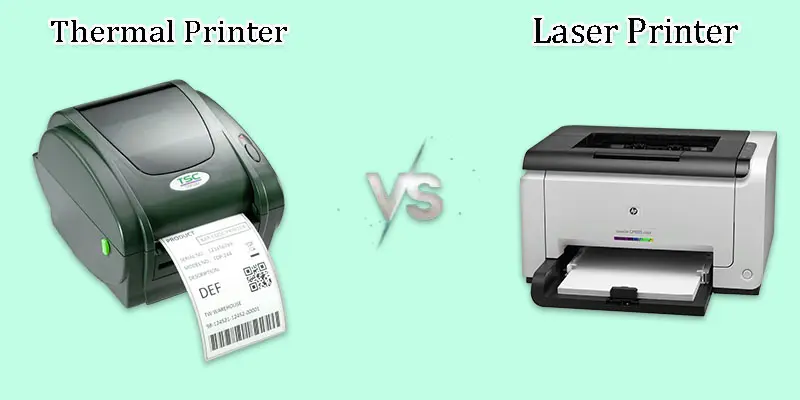
What Is the Difference Between a Laser Printer and a Thermal Printer?
When choosing a printer, it’s important to understand how a laser printer and a thermal printer differ in printing style, cost, and use.
| Laser Printer | Thermal Printer |
|---|---|
| Uses laser light and toner to print on paper. | Uses heat to print on special thermal paper. |
| Works with toner powder and laser beams. | Works with heat-sensitive paper and print heads. |
| Produces sharp and clear prints. | Prints are simple, often black and white. |
| Very fast, ideal for bulk printing. | Medium speed, best for continuous label rolls. |
| High upfront cost, low running cost. | Low upfront cost, but needs special paper. |
| Requires toner replacement and cleaning. | Needs paper rolls and occasional head cleaning. |
| Operates quietly. | Very quiet while printing. |
| Uses toner cartridges. | Does not use ink or toner. |
| Works with normal paper. | Needs heat-sensitive thermal paper. |
| Long-lasting and fade-resistant prints. | Prints fade over time, especially in heat. |
| Supports color printing. | Mostly black and white prints. |
| Office documents and reports. | Labels, barcodes, and receipts. |
| Resistant to moisture and sunlight. | Can fade when exposed to heat or light. |
| Needs warm-up before printing. | Instantly starts printing. |
| Usually large and less portable. | Compact and easy to carry. |
| Uses more power due to laser technology. | Consumes less power. |
| USB, Wi-Fi, and Ethernet supported. | Often uses Bluetooth or USB. |
| Best for high-volume printing. | Best for small, frequent prints. |
| Office, schools, and businesses. | Retail, logistics, and hospitals. |
| Moderate, depends on toner use. | Low, only paper rolls needed. |
| HP LaserJet Pro, Canon Laser Printer. | Epson TM-T88, Zebra Label Printer. |
| High resolution, clear text and images. | Medium clarity, not for photos. |
| Normal temperature process. | Uses heat up to 200°C. |
| Uses toner; not very eco-friendly. | No ink or toner, less waste. |
| Long-lasting and durable printer. | Shorter lifespan with heavy use. |
| Used in an office to print hundreds of reports daily. | Used in a store to print customer receipts instantly. |
What Are the Pros and Cons of Thermal and Laser Printers?
Before choosing the right printer, it’s helpful to know the advantages and disadvantages of laser printers and thermal printers so you can find which one suits your daily printing needs best.
What Are the Pros of Thermal Printers?
- Prints fast and quietly.
- Compact and easy to carry.
- Low maintenance, no ink or toner needed.
- Great for receipts, labels, and barcodes.
- Uses less power, making it energy efficient.
What Are the Cons of Thermal Printers?
- Prints can fade with heat or sunlight.
- Limited to black-and-white printing.
- Needs special thermal paper.
- Not suitable for photo or color printing.
- Shorter print lifespan for long-term storage.
What Are the Pros of Laser Printers?
- Produces sharp, high-quality prints.
- Fast printing speed for bulk jobs.
- Prints last long without fading.
- Works well with normal paper.
- Ideal for offices, schools, and businesses.
What Are the Cons of Laser Printers?
- Higher upfront cost.
- Requires toner replacement.
- Larger in size, less portable.
- Uses more power.
- It can take a few seconds to warm up before printing.
Which One Should You Choose?
Choosing between a thermal printer and a laser printer depends on what you print most quick labels or detailed documents.
When Should You Choose a Thermal Printer?
- Best for printing receipts, barcodes, or shipping labels.
- Ideal for retail shops, warehouses, and delivery services.
- Low maintenance with no ink or toner needed.
When Should You Choose a Laser Printer?
- Perfect for offices, schools, or home document printing.
- Produces sharp, long-lasting, and professional prints.
- Handles large printing volumes quickly and efficiently.
Final Thought
It all depends on your printing needs. If you want fast, low-cost printing for labels or receipts, go for a thermal printer. But if you need high-quality prints for reports or documents, a laser printer is your best pick. Think about what you print most and choose wisely. The right choice will save you time and money.
FAQS
It depends on your use. A thermal printer is better for receipts and labels, while a laser printer is best for documents and reports. Laser printers give sharper prints and last longer, but thermal ones are cheaper to run.
No, thermal printers don’t need ink or toner refills. They use heat to print on special paper. You only need to replace the thermal paper roll when it runs out.
For residential use, a laser printer works well. It gives clean prints, works fast, and doesn’t need frequent maintenance. It’s perfect for homework, reports, and personal documents.
A thermal printer usually lasts 5 to 10 years, depending on how much it’s used and how well it’s maintained. Regular cleaning helps it last longer.
Not really. Thermal printers are made for text and labels, not detailed photos. For photo printing, inkjet or laser printers work much better.
Yes, they need thermal paper, which reacts to heat for printing. Normal paper won’t work in a thermal printer.
It depends on the printer model and paper roll size, but most can print thousands of labels or receipts before needing a new roll.
Yes, they can work in cold weather, but extreme cold might slow printing or affect paper quality. Keep them in moderate conditions for best results.
No, thermal printers don’t need ink or toner. They use heat to create images on special paper, which makes them simple and cost-effective.
Liquid ink is not used by laser printers. After a lot of printing, the toner powder they utilize may run out. You’ll just need to replace the toner cartridge when prints start fading.




- Be Respectful
- Stay Relevant
- Stay Positive
- True Feedback
- Encourage Discussion
- Avoid Spamming
- No Fake News
- Don't Copy-Paste
- No Personal Attacks
- Be Respectful
- Stay Relevant
- Stay Positive
- True Feedback
- Encourage Discussion
- Avoid Spamming
- No Fake News
- Don't Copy-Paste
- No Personal Attacks
