Cloud Computing Email Services | Easy Setup & Management
Published: 12 Sep 2025
Are you looking for a better way to manage your emails? Cloud computing email services let you access your email from anywhere, on any device. Unlike traditional email systems, cloud email stores your messages on secure servers online. This means you don’t need expensive hardware or IT teams to manage your emails. Many businesses now use cloud email because it is fast, reliable, and easy to scale as the company grows. Have you ever tried accessing your email from your phone or tablet? That’s one of the simple ways cloud email makes life easier.
What are the Basics of Cloud Email?
Cloud email is a way to send, receive, and store emails using the internet instead of keeping everything on your computer. It works on secure online servers, so you can check your emails from any device, like your phone, tablet, or laptop.
There are two main types
- Cloud-based email – All emails are stored online and managed by providers like Microsoft 365 or Gmail.
- On-premises email – Emails are stored on your own company’s servers, needing IT support.
Using cloud email is simple, safe, and saves money because you don’t need extra hardware. For example, small businesses can manage all staff emails without buying expensive servers or hiring a big IT team.

What are the Different Cloud Email Service Options?
When it comes to cloud computing email services, there are many options to choose from. Here are the main types:
Top Cloud Email Providers
- Providers like Microsoft 365, Gmail (Google Workspace), and Zoho Mail offer reliable cloud email solutions for businesses and individuals. They handle storage, security, and updates for you.
Cloud Email Sending Services
- Services like Amazon SES or SendGrid help businesses send large numbers of emails quickly and safely. They are perfect for newsletters, notifications, and marketing campaigns.
Choosing the Best Cloud Email Provider
- Look for security, storage space, reliability, and ease of use. For example, a small company might choose Gmail for its simple interface, while a large company may pick Microsoft 365 for advanced features.
What are the Benefits of Cloud Email Services?
Using cloud computing email services brings many advantages for businesses and individuals. Here are the main benefits:
Access Anywhere, Anytime
- You can check your emails from your phone, tablet, or computer. For example, employees can work while traveling without missing important messages.
Cost-Effective
- No need to buy expensive servers or hire a large IT team. Cloud email saves money on hardware and maintenance.
Automatic Updates and Maintenance
- The provider handles updates and security, so you always have the latest features without extra effort.
Better Security
- Cloud providers use strong encryption and backup systems to protect your emails from hackers or data loss.
Scalable
- As your business grows, you can easily add more email accounts without installing new servers.
Saves Time
- With easy management and quick access, teams can focus on important work instead of email problems.
What Is the Technical Overview?
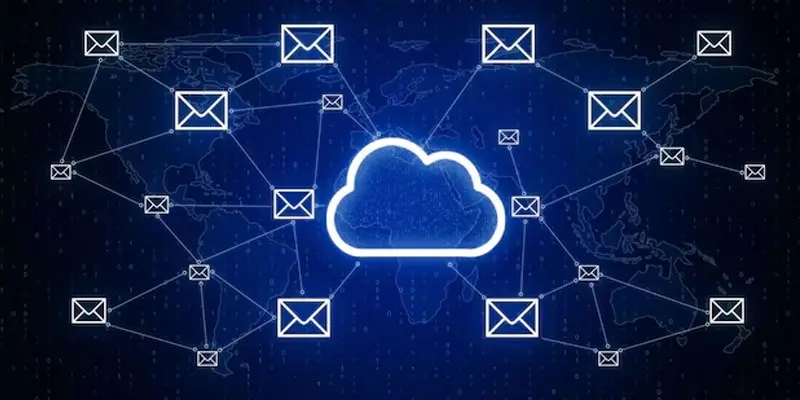
Cloud computing email services work by storing your emails on secure online servers instead of your computer. When you send or receive an email, it travels through these servers safely and reaches the recipient almost instantly.
What are the Key Features of Cloud Email Services?
- Storage Space – Cloud email provides large storage, so you don’t have to delete old messages.
- Synchronization – Your emails, contacts, and calendars stay updated on all devices automatically.
- Backup & Recovery – Emails are automatically backed up, so you never lose important information.
- Virtualization – Cloud servers can host multiple users efficiently, saving costs and improving speed.
- Security Measures – Encryption, spam filtering, and advanced firewalls protect your data.
Cloud Email vs. Traditional Email Hosting
| Cloud Email | Traditional Email Hosting |
|---|---|
| Works on cloud servers | Works on local servers |
| Easy to set up | Needs manual setup |
| Access from anywhere | Access mostly limited |
| Scales quickly | Scaling is hard |
| Low upfront cost | High upfront cost |
| Pay-as-you-go | Fixed cost |
| Automatic updates | Manual updates |
| High storage options | Limited storage |
| Strong security tools | Basic security |
| 24/7 uptime | Downtime risk |
| Backup built-in | Manual backup |
| Shared by providers | Managed by company |
| Better collaboration | Limited features |
| Less IT staff needed | More IT support needed |
| Future-ready | Outdated over time |
What are the Popular Services and Case Studies?
Many businesses trust cloud computing email services for reliable communication. Here are some popular options and examples:
Amazon SES (Simple Email Service)
Amazon SES helps businesses send large numbers of emails quickly and safely. For example, an e-commerce store can send order confirmations and promotional emails without worrying about delays or spam filters.
Microsoft 365
Microsoft 365 offers cloud email with calendars, contacts, and storage. Companies like small startups to large corporations use it to manage employee communication efficiently.
Gmail / Google Workspace
Google Workspace provides secure cloud email with easy collaboration tools like Docs and Drive. For instance, a marketing team can share documents and chat while keeping all emails in one place.
Other Case Studies
- A small company reduced IT costs by switching to cloud email.
- A remote team improved productivity because everyone accessed emails anywhere.
- Using cloud email services helps businesses save time, improve communication, and stay secure.

Which Challenges and Considerations Should You Know?
Even though cloud computing email services are very helpful, there are some challenges to keep in mind:
Internet Dependence
- Cloud email needs a stable internet connection. Without it, you cannot access your emails.
Security Risks
- While providers use strong protection, there is always a small risk of hacking or data breaches.
Cost for Large Teams
- For very large businesses, subscription fees can add up, especially with premium features.
Limited Customization
- Some cloud email platforms may not allow full control over certain settings compared to on-premises systems.
What Is the Future of Cloud Email Services?
The future of cloud computing email services looks exciting and full of new possibilities.
AI Integration
- Smart features like automatic email sorting, spam detection, and smart replies will save time and make communication easier.
Better Security
- Providers will use advanced encryption and AI-based threat detection to protect emails from hackers.
More Collaboration Tools
- Cloud email platforms will include more built-in tools for teamwork, like chat, video calls, and document sharing.
Faster and Smarter Services
- Cloud servers will become faster and more efficient, making email access instant and reliable worldwide.
Conclusion
Cloud computing email services make email management easy, secure, and fast. They let you access emails from anywhere, save money, and focus on important work. With top providers like Microsoft 365, Gmail, and Amazon SES, businesses can boost productivity and stay protected. Don’t wait to improve your communication, switch to cloud email services today, and experience the benefits yourself!
FAQS
What is cloud email service?
A cloud email service is an email hosted on the internet instead of local servers. You can access it from anywhere using any device. Gmail and Outlook.com are common examples.
What is email communication in cloud computing?
It means sending and receiving emails using cloud-based servers. These servers store and manage your emails online. It makes email faster, safer, and more flexible.
What is an example of a cloud-based email?
Gmail, Outlook.com, and Yahoo Mail are cloud-based email services. They store emails online, not on your device. You just need the internet to access them.
Is Gmail a cloud service?
Yes, Gmail is a cloud service. It stores all your emails on Google’s servers. You can log in anytime from your phone, tablet, or computer.
Is Chrome a cloud service?
No, Chrome is not a cloud service. It’s a web browser that helps you access cloud services. For example, you can open Gmail or Google Drive using Chrome.






- Be Respectful
- Stay Relevant
- Stay Positive
- True Feedback
- Encourage Discussion
- Avoid Spamming
- No Fake News
- Don't Copy-Paste
- No Personal Attacks
- Be Respectful
- Stay Relevant
- Stay Positive
- True Feedback
- Encourage Discussion
- Avoid Spamming
- No Fake News
- Don't Copy-Paste
- No Personal Attacks
